
Ep 38. Who Made That Coaching Rule?
Entrepreneurship • Aug 4, 2026, 3:41:33 PM • Written by: Erin Aquin
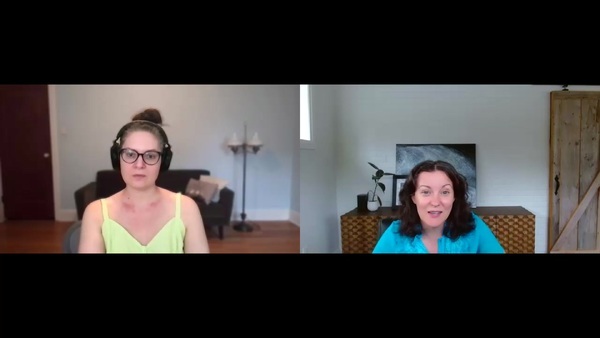
Erin’s drinking a Mallorca herbal liqueur with sparkling water, maple, lemon, and cinnamon basil from the garden. Elana’s got lemon-ginger liqueur with seltzer, extra lemon, apple cider, and frozen blueberries.
You’ll hear about:
- Why “good advice” can become a weird little cage if you stop questioning it
- The difference between useful structure and arbitrary coaching rules
- What gets lost when coaches build from someone else’s formula instead of their own instincts
- Why group coaching deserves to be treated as its own craft, not just the next business milestone
- How participation, play, and community could make group coaching way more alive
This one’s for coaches, facilitators, and creative business owners who want enough of a plan to keep moving, but not so much plan that the interesting stuff gets squeezed out before it has a chance to breathe.
Connect with Elana and Erin
Elana Mckernan is a Master Certified Life and Creativity Coach who specializes in helping perfectionists create more by treating themselves better. Find her on Instagram at https://www.instagram.com/elanamckernan/ and book a consultation at https://www.coachingwithelana.com/book-a-consult.
Erin Aquin is a Master Certified Life Coach and co-author of the #1 bestseller “Superabound: Live the Life the Universe is Dreaming For You.” Read the book at https://besuperabound.com/book and book a consultation at https://besuperabound.com/consultation.
Watch here:
Listen here:
Transcript
Hello. I forget who's starting. Did we decide? Oh, no. No, it's you. We're off to the races here. Always you. I love when you start. Really? Yeah. Are you? No, it's not masochistic. You're sadistic. Are you sadistic? Do you like watching me be awkward? Welcome to the Coaching Mixer. We are your hosts. My name is Elena. And I'm Erin. I did a presentational gesture. She introduced herself. I need more hand things. Oh, I just like hit myself. A lot of hand things today. I don't know what that's about. I haven't. I've drunk a sip of my beverage. So I don't know what's going on. Well, it's hot outside, so I feel like we're all a little drunk. It is. It's so hot today. And like five minutes before this call, it started a torrential downpour. So that's exciting. That's so nice. I hope it cools off a little. Clear the air. All the smoke. Yeah, there are fires in Canada, aren't there? There's wildfires. I mean, we get them every year, but it seems like it always seems so bad. And today, the sky is orange. like where i live we're really far away from them but uh-huh yeah we i went outside this morning i'm like this just looks very like apocalyptic kind of yeah so yeah that's unsettling we've had an indoor day today yes i can understand that i hope that they get contained quickly and everyone yeah yeah all the things okay but that's not the topic of our conversation today. First of all, tell me what you're drinking. I am drinking a, it's a lemon ginger liqueur with some seltzer water, extra lemon juice, a little bit of apple cider, and then I put some frozen blueberries on top because I can't really eat fresh blueberries right now because there's some, there's a terrible outbreak going on. I do not wish to risk that. So yeah, got some frozen blueberries, which is making it kind of nice and pretty. That's so fun. It looks great. It is tasty. What are you drinking? It's not as pretty, but it is. It just looks like lemonade, but it is herb to Majorca, which is a liqueur that you can only get on the island in Majorca. Kind of got like a licorice. taste but I don't think it's licorice I think it's like some other herb in that family um and it's like a secret recipe of like these things so it's very delicious and I like to think it's very medicinal um with some kind of sparkling water maple lemon and a little bit of cinnamon basil from my garden which I'm obsessed with wait is it like is the plant cinnamon basil or is it a combination of cinnamon and no it's a cinnamon basil variety wow actually like a little bit um purple and when when we got it Steve was like what are you gonna do with cinnamon basil like I'm gonna make pesto with this weird flavored basil and I've been making tons of lemonade I find it really refreshing my kids like it I've been putting it in um different concoctions that we're making and it's cinnamon basil. Does it actually taste like cinnamon and basil? Yeah. Oh, that sounds amazing. Yeah. I'm not sure how they, how the botanists made it, but it's cool. That sounds delicious and very interesting. Well, cheers. Cheers. Yeah. Our theme today, if it's not clear, was liqueurs of some kind. We gave ourselves an open wide open space. Yeah. This is refreshing. He's good. It's funny. We, we take like literally 10 seconds before we start recording to be like state of the union. Do we have a topic? And I was like, absolutely no topic. And also it sparked an idea in me, unless you have something. Oh, that's great. I was going to say, we don't know what we're talking about. So yay. We kind of don't. I'm just bringing this on Aaron, but it might be interesting to talk about like. lack of plan in business or like when to have a plan and when not to have a plan or like your relationship to planning or not planning in business because like I know I don't know I'm teaching right now I'm teaching coaches and they're like very close to graduating and we're also bringing on like a new cohort of coaches that's going to start in September and so I'm talking to some people who are considering coaching and a lot of what I'm hearing is like people who don't see the like super clear plan post coaching are very hesitant to even get started. So I think there is, there are times in which needing or wanting to have a very specific plan before you've even taken like initial steps can be detrimental and also like being totally aimless can be a struggle too. Yeah. Yeah. I think it's, I love it. It's one of the, probably the trickiest parts about owning a business. Like we're talking about this in the context of coaching, but I think if you are leaving a nine to five type of job and you don't have some blueprint, it can feel very scary to step into the steep learning curve of having your own business. And there's a reason that most companies have structures and systems and you know, quarterly and yearly planning and all of that. Because I think sometimes even though we don't always follow the plan and the plan doesn't always work out the way we projected it to, there is something that can be very anchoring about knowing first you do this, then you do this. And when you get this outcome, then you move to this. I think it can be really helpful. And of course, the... complicated part is that some people want to formula so badly that they don't get creative about how they could build their coaching business. Like they don't give themselves permission to create their own plan or like they think there are rules on how they should do it. Yeah. I mean, I've literally heard people say things like, you know, in, in one of the coaching circles that you and I were part of, there was this big thing. I was like, you shouldn't start a podcast until you've made X number of dollars. And like, people would quote this to me. They were like, but I haven't made it. I haven't made six figures. I shouldn't start a podcast. And I'm like, that was someone's idea, probably given to a specific person to just help them feel some constraint, get them to like focus on doing the next revenue generating activity. Yeah. If you really want to start a podcast and that's going to, which I did, this was like years and years ago. My other show has gone through a whole bunch of different titles and themes and different things. But I just remember thinking, I love to create. And if I'm not doing something that's pushing me to articulate what I'm thinking about, I will just stay in my own little head. And I won't. be doing anything that shows people how I can help them or give them a sense of like who I am as a coach. And I just remember hearing so many people say, I really wish I could start a podcast or I really wish I could write a book, but like, I don't have the baseline that this one person said I must have in order to do it. And I was like, well, that's dumb. Like, I love that. And I say that to somebody, but I'm just like, that is if you can't actually answer why. you can answer why and you still have the desire to do it like you're not we're not children like we get to make our own rules but i do think i i think in retrospect i don't remember that i actually that sounds vaguely familiar But I do think there were like some other rules that I use to constrain myself before I think it was helpful to constrain. Like, I actually do think there's a helpful energy at the beginning of starting a business that's like, I'm excited about this. I want to do all of the things. I want to try all of the things that can be really powerful. And it might not always result in exactly what you want it. result in like it might not get you to six figures immediately but you're out there like trying things testing out ideas learning what works learning what doesn't work refining your voice like there's really no other way to do that than by just like trying a bunch of shit and like seeing what happens yeah yeah and I think, you know, I can see where coaches are following kind of a playbook and it's, you know, it's, it's a playbook for a reason. There's probably things about it that work. I mean, unless your playbook is like six years old, then maybe, maybe not. I think it's helpful to just have some of those touchstones and things to do. But the other piece about being an entrepreneur is you do, as you said, like you do need to find your own. So if you're just teaching a tool that you learned in your coach training and then doing that as your marketing, and then there's 20 other people teaching the same tool, doing the same thing in your marketing, it's really hard to differentiate yourself. It's really hard to start to like feel safe enough to present your original ideas or stretch and do things your own way. Do you think, salute. Do you think that, oh, what was I going to ask? Are there any rules, like rules that you sort of followed that you kind of wish you hadn't? Oh my gosh. I have such a bad, I have such a bad memory for things that didn't work. I'm just kind of like, oh yeah. Sure. That's kind of a superpower. I don't dwell on what didn't work, but. Superpower. I think I. The niching, niching down. That's like, Oh yeah. I remember wanting to coach people in relationships and someone who had a successful business telling me on a coaching call, like, Oh, that's too vague. You can't just be a relationship coach. You have to be a coach for like husbands and wives or this and that. And like all of these things. And I was just like, I think this person thinks I've never done marketing before. I think this person just thinks like they're probably they're giving me advice that they would give to a brand new business owner and like constraint. But I kind of at some point was like, I'm not going to do like I think I tried that and it really wasn't working. It felt very inauthentic because I was just like some people who are not necessarily in like a traditional marriage need coaching. And I have. clients who long-term partners or people who are in throuples like I don't want to be like a prude to my clients in relationships um I want them to know they're like absolutely safe at like any way their relationship looks so at one at some point like after trying that I was just like this doesn't feel like me and I stopped doing it and the result of that was I actually was able to be successful within that wider niche that's amazing yeah because you were allowing yourself to like be you yeah it wasn't like I can only coach wives of people who are in relationships who've been married for 20 plus years I'm just like why that's so stupid like yes I guess there's a difference between 20 years of being married in 10. probably for a lot of people that's true but like to who cares yeah and there's also literally no client or potential client out there being like oh she only coaches people who have been married for 10 years I've been married for 12 years therefore I do not apply like people don't care about that at all but then coaches kind of turn it into a weird thing where they like really make it a central feature of their marketing yeah it's like Why do you only coach business owners in LA? Like what's the, what's the big deal with that? Yeah. Owning a business is so different and maybe it is in like a substantive way, but if it's not substantive, like what is the point? And especially if it doesn't feel authentic, if you are a person who's like, I am so passionate about LA, I only care. about helping la business owners or like if your mission is to revitalize the community that's one thing but like as an arbitrary like you have to be specific strategy like no no not necessary that's a good one because a lot of people get hung up on that yeah what about you like were there rules that you followed or heard and then regretted following yeah i mean similarly i'm not like i'm not like sitting in a dark room being like if only i had done that differently but i do think um so one of the very common and i think is still actually very a very common word of wisdom for new coaches um to start out with only one-on-one coaching and not really do group coaching up front and i'm i wouldn't say like i'm very happy that i did one-on-one coaching and i learned a lot and also some of my i i had to shut down some ideas that i think would actually be very interesting and i also think like the idea of creating a sense of community especially in like the art and creative space is very appealing to me and so i think that was I think this goes to show like any rules or advice like I'm sure there are good reasons for a lot of them and also like you get to make the rules and you don't have to like there are exceptions to everything and you get to kind of pave your own pathway because I do think like some I shut down some ideas that I think would have been interesting to explore and maybe they will exist in some form in the future but like there were some ideas for group programs or for like like supporting communities of people that i think would have been interesting to follow through on if i'd given myself permission to just like run with it i think that is like like that's such a common one. I think that's such a good one to bring up because there are worlds where, I mean, I think like, so the big argument that I've heard about, like why you should start with one -on-one versus group is like, they are different skill sets in a way. But like most group coaching, you're only really ever coaching one person at a time. Sometimes you might be like coaching two people on a situation, but like, it's, it's never like there's five people talking at once and I need to have simultaneous, like, I don't know what, and, and if you have worked in group facilitation in other arenas, I remember feeling like that was really weird that people would say, oh, you shouldn't coach in groups. I'm like, I've been teaching yoga classes for like 16 years. Like I figured out how to. say one thing to 40 people who all have different capacity in their body and figure out how to get people to kind of move together and understand me or say it in a different way or modify things and so it actually felt very restrictive to hear to hear that I'm like I think this might be a skill we want to learn from day one if it's not one that like I just don't I think that that was like, I had a bone to pick with that one too, because I'm like, coaching one-on-one will never teach you how to coach in a group setting. Right. So saying that like your, your business should grow with one-on-one only, and then move to groups. It's like, you might suck as a group facilitator because no one is teaching that as a class, or at least when coach training, it wasn't like there was no curriculum for how do you. give a group an experience in the way that yoga there was. It was like, oh, it's really easy. You teach a group of people yoga. And then if you teach one person, you're just only teaching that person. Like there was very interchangeable in that direction. It's kind of funny. I'm like, what if we started training people to only coach in group settings? Yeah. That would be kind of a neat, ooh, brainstorm. I know that it's kind of interesting because I love that you're articulating that they are two different skill sets because I think there's like the positioning of it. It's like reminding me of almost of the relationship elevator. Like you. like start dating. That's like one-on-one coaching. You get really good at one-on-one coaching and then you like graduate to group coaching. And like, I understand there is maybe a logistical constraint to that. Like you're one person, presumably if your goal is to grow demand more than like, sure, it makes sense. You would then, you know, go into group settings where you can coach more people at once. But I don't think like, Like one on one and group like group is you don't you're not more skilled if you can manage a group just as you're not more skilled if you can manage one on one coaching. And I wonder if how different group coaching would be and how much more like how many more ideas and how much more interesting group coaching might be if we separated the two and just allowed that to be a path to develop. Yeah, because what we're calling group coaching is usually. coaching one person at a time while other people watch. Yeah, exactly. But I have clients who are like consultants and they're facilitators for groups and the way they have been trained and the way that they run their days is it's very engaging and the group really is working together in a collaborative way. And it's a conversation the room is having, not just like one person at a time getting one-on-one coaching while everybody else waits their turn. Yeah. Oh my gosh. We might be inventing something amazing. Ladies and gentlemen, you and ladies, like you are listening to them. Yeah. On this year, July 15th. But yeah, I think that is really interesting. And actually like. now that I am almost regretting it a little bit more now that we're digging more into it because my background is directing theater which is such a collaborative at least the way I approach it it's so collaborative you're always aware of the different voices in the room and you're like shepherding them toward a common goal and so That is a very different dynamic than what we see in group coaching experiences, where it is like occasionally like it's one like a talking head. Maybe they'll teach something, maybe not. And then you promote someone to panelists and you see their face and the talking head and then you bring them back. And maybe sometimes you look at the chat. But like, that's a very different thing. There's a lot of potential, I think, in. using groups as like a form of community building as a form of like ideation. Yeah. So if we allowed that to like sort of be its own thing could have some really interesting stuff. This is going to be haunting me tomorrow when I am doing a group coaching call in someone's community. How can I bring everybody in? without losing this person would it break everyone for me to just do this differently i'm gonna i'm gonna stick to what i agreed to do but yeah and there's nothing that's a very impact like i don't want to dismiss that it is very impactful i think it's just again these arbitrary arbitrary rules that one person has decided that like then a lot of people are like oh no you can't do that that's not allowed and there's a cost to that Okay. I'm really curious and you don't have to share this if you don't want to, but I, you said that some ideas were getting sparked for you as this was kind of coming up. Is there anything you would be willing to share with us about what, what's going on inside? Oh, for like, like the group coaching conversation. Yeah. Yeah. I mean, um, so in, okay. Yeah. I have like five at once now to slow my brain down. One thing that I have explored a little bit, sort of out of necessity, doing guest group coaching in communities that are maybe a little smaller, where people are a little more shy about volunteering, and in areas where they have expertise that I don't. Like, crowdsourcing is one that can be very effective, but I don't see a lot of group coach facilitators doing. So, like, if a client is struggling with a thought, I might, like... the people who are watching to share some ideas related to their issue and like then use those as like kind of sparks to gauge okay where is the client at are they able to take this in does anything like feel interesting to them around that so that's like maybe a little more of a like it's pretty easy to incorporate it's a little more mundane but like I don't know I've also been thinking a little bit about um Like some of the magic of rehearsals is being able to like try things on in a very low stakes environment that's very supportive. So I wonder, I don't, that's a very abstract idea, but like coaching is also about trying new thoughts on, new situations, getting practice, like playing things out. So I wonder if there would be a way to utilize the community and like kind of supporting that exploration a little bit. I love that. I mean, my very first like deepest spiritual experiences were in like theater. the theater like so I think there's a lot that the theater world could teach coaches facilitators consultants because you know kind of to what we've been talking about in the last couple of episodes the way that people will kind of shut down their emotions before they fully feel them or you know we'll say things like I know I shouldn't think this or I know I shouldn't feel this it's like what if as coaches we we offered them the i the opportunity to play with it and say could we try it on where whatever you're thinking that you shouldn't be feeling like can we just blow that up for a minute like dramatize it make it like you think oh yeah i'm like complain just be like oh it was so hard and they were so mean like just over dramatize it to kind of facilitate an emotional movement where maybe the person can feel it deeply or maybe they can laugh at it finally or maybe like there's some energetic shift beyond just thinking I should be stiff grown-up who never is affected by what someone said to me in third grade yeah like like a sense of introducing a sense of play yeah to play coaching coaching yeah I love that And I'm always, I also have a hot, like a very sensitive allergy to like awkward, like, I don't know, like forced, like a most like, what do you call them? Like in corporate events when you're like mingling and you have those exercises. So like, I think, but I do think there's so much potential here to play a little bit more and to like get people more directly involved who aren't. spotlighted in the call, if that makes sense. Yeah. And I mean, I'm sure you've had this experience, but like sometimes when you're not spotlighted in those, in those coaching calls, you're kind of a witness and you're, and you happen to be very present. I think it's sometimes it can be hard and a lot of group coaching. Sometimes it's hard. Like I tune out sometimes I'm like, I hate to say it, but. When I'm like, I've watched 10 people get coached in a week. Sometimes I'm just like, but in the moments where the facilitator or the coach has like brought us in and given us something to pay attention to, I often find like, that's when the profound things happen. Like I have had moments when someone else is being coached and I have like a little light bulb moment of my own. Sometimes it's about the person, but more often it's like self-referencing. And we don't make room in group coaching settings to share some of those things. Right. A lot of times, like what if after there was a group coaching moment, everyone shared something that it sparked for them. And we just made that part of the group coaching. culture. And then even when you're not being coached, it is still your coaching. You're still getting what you need. I love that. Yeah. It's like you're actively participating even when you're not the one in the hot seat. Yeah. Because if we're talking about mindset work, a lot of people, maybe this is a rule. Maybe it's a rule that some people hate. But I think, you know, it really does highlight that where we, what we measure, what we pay attention to is what we see more of. And so if you went on to a group coaching call as a participant, but you were not the person being coached in that moment, but you went in with the expectation that I'm going to get gold from this and the coach, the facilitator. I expected everyone to get gold and said, tell me what gold you're getting from this. Tell me what is meaningful for you. And that was just part of the exercise for the group. That could be a really beautiful and collaborative thing. I would love to know if somebody had an aha moment while I was bawling my eyes out to my couch. Yeah, absolutely. What it meant for them, even if it had nothing to do with weed. Yeah